
Research & Academic Work
Connecting Research, Education, and Frontline Practice
Dr. Abbott's academic work focuses on police–clinician partnerships, behavioral health crisis response, program implementation, and the intersection of behavioral health and criminal justice.
Academic Leadership
Dr. Abbott is an Associate Professor in the Counseling and Behavioral Health Department and Director of the Center for Crisis Response and Behavioral Health at William James College in Newton, Massachusetts.
Her academic work connects research, professional education, and frontline practice to advance effective behavioral health crisis response and police–clinician partnerships.
From Practice to Publishing
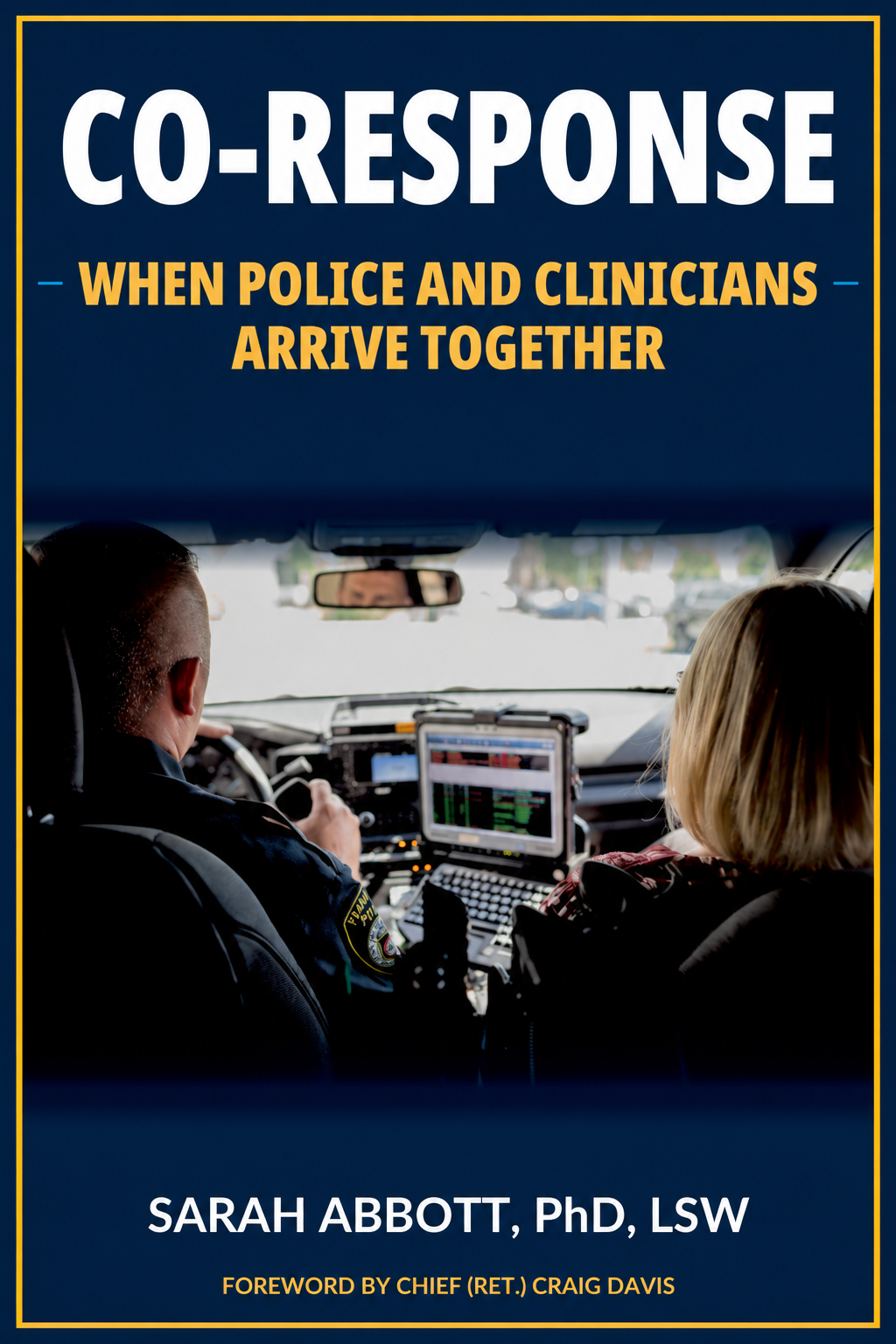
Coming January 2027
Co-Response: When Police and Clinicians Arrive Together
Drawing on more than two decades of co-response experience, research, and international perspectives, Dr. Abbott examines the model's evolution and offers practical guidance for developing, implementing, and sustaining effective police–clinician partnerships.
Written for law enforcement, behavioral health professionals, educators, the general public, advocacy groups, and policymakers.
Research and Publications
European Congress of Psychiatry | Madrid | Spain | 2025
Dr. Abbott co-authored an e-poster, “Training Police Officers How to Interact Effectively with Those Who Have Autism,” with Dr. Valerie Murphy and Dr. Gautam Gulati at the 33rd European Congress of Psychiatry.
Stalking and Autism
Dr. Abbott co-authored a published letter to the editor in the Irish Journal of Psychological Medicine, examining the relationship between stalking behaviors and Autism Spectrum Disorder.
And Justice for All: Families & the Criminal Justice System
Dr. Abbott contributed a chapter to And Justice for All, highlighting the Framingham Co-Response Model and its impact on individuals, families, and their community.
Evaluating the Impact of a Jail Diversion Program on Police Officers’ Attitudes Toward the Mentally Ill
Dr. Abbott’s doctoral dissertation at Northeastern University measured the impact of the Co-Response model on police officers’ attitudes toward individuals in a mental health crisis and their role in responding to them.